










Dittobase

Home

Games

Pokémon GO
Pokopia
Pokémon Unite

Cards

TCG Pocket
Pokémon TCG

Main Series

Legends Z-A
Scarlet & Violet

Tools

Games

Game

Games

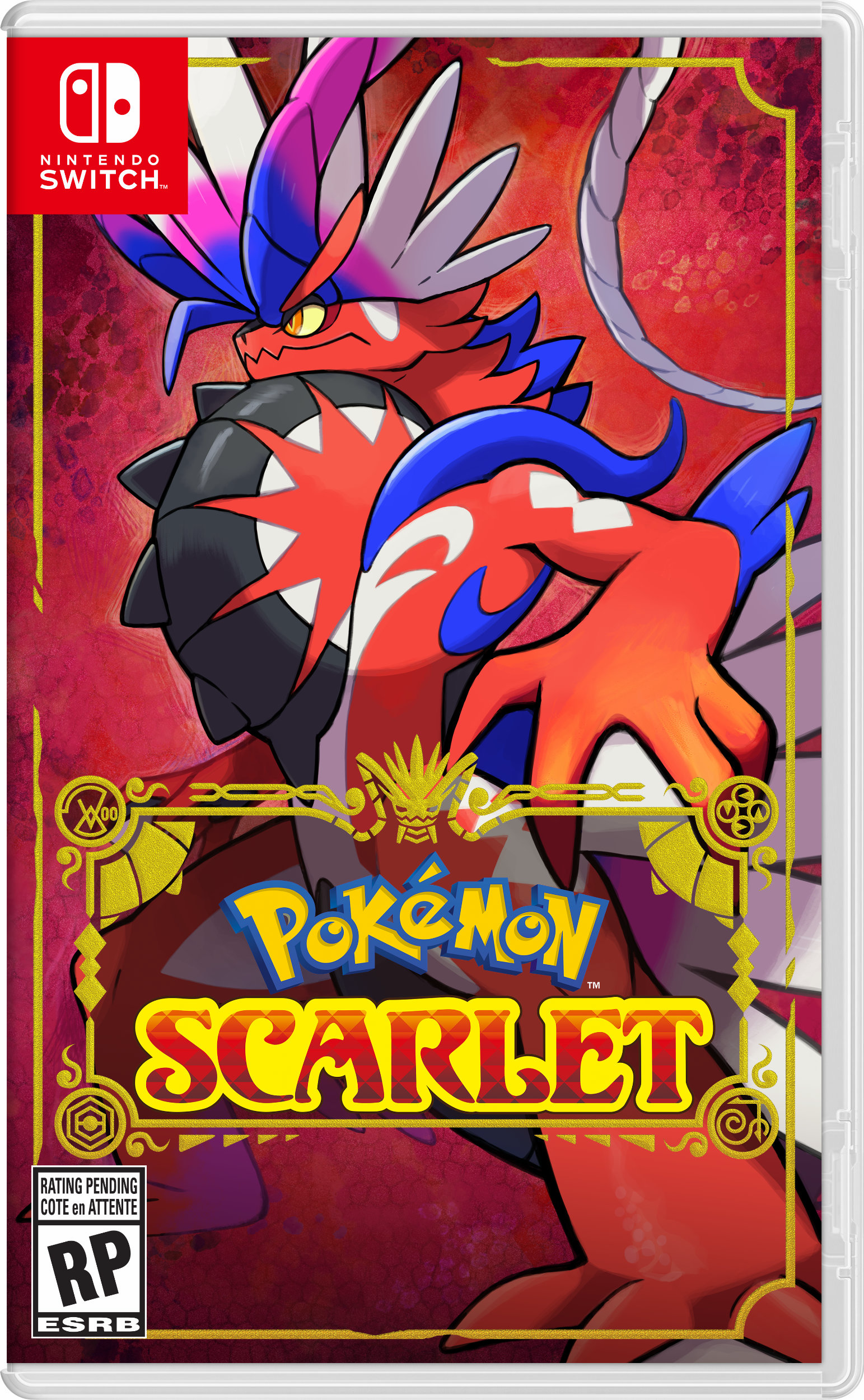
Pokémon Scarlet and Violet box art

Pokémon Scarlet and Violet

The first open-world adventure in the Pokémon series

Generation 9Game Freak

Overview

Pokémon Scarlet and Pokémon Violet launched worldwide on Nintendo Switch on November 18, 2022, opening Generation IX with the series' first true open world. The Paldea region, drawn from the landscapes of Spain and Portugal, is one continuous map with no level scaling, so any mountain, sea cave, or city is fair game from day one. Trainers attend an academy (Naranja in Scarlet, Uva in Violet) and head out as part of an independent study programme called the Treasure Hunt.

The Treasure Hunt is really three stories running in parallel. Take on Paldea's eight gym leaders on Victory Road, hunt giant Titan Pokémon for rare herbs on Path of Legends, or dismantle the school's truant army on Starfall Street. Order does not matter, and progress on each path unlocks new traversal moves for your rideable legendary, Koraidon (Scarlet) or Miraidon (Violet).

The headline battle mechanic is Terastallization, which crystallises a Pokémon into a "Tera" form and overrides its typing with a new Tera Type. Tera Raid Battles let up to four trainers team up against a Terastallized boss in real time, and the Union Circle puts a full party of friends into the same open world together. Finish the three story paths and a fourth chapter, The Way Home, opens up the mystery at the bottom of Area Zero.

Story

On the gym side of the Treasure Hunt, called Victory Road, trainers chase a Champion Rank by clearing all eight Paldean gyms. The roster runs from the Bug leader Katy and the Grass artist Brassius to the Ice climber Grusha, with a steady difficulty curve as you visit more cities. The Elite Four (Rika, Poppy, Larry, and Hassel) sit at the top of the academy's league, and beating them leads to a final match with Top Champion Geeta.

Path of Legends follows Arven, a quiet senior trying to save his sick companion, the legendary Pokémon you ride. Each chapter is a hunt for a Titan: an enormous, often Terastallized Pokémon guarding a Herba Mystica. Defeating a Titan lets Arven cook a sandwich that strengthens your legendary, unlocking a new traversal ability such as climbing, swimming, or gliding.

Starfall Street tackles Team Star, a once-rebellious school faction that has lost its way. Each base is run by a boss who builds a single-type squad, and battles open with a five-Pokémon Starmobile auto-battle before the boss fight itself. Finishing all three paths converges into The Way Home, the trip down into Area Zero where Paradox Pokémon (ancient and future variants) appear and the truth about Professor Sada or Turo finally surfaces.

Key features

Open-world Paldea

Paldea is one continuous, seamless map. No loading screens between routes, no level scaling, no gating. Climb a peak the moment you leave the tutorial, or wander into a high-level zone and run for your life. Wild Pokémon roam in the overworld, weather changes the spawn pool, and most ledges, rivers, and walls become traversable as your ride unlocks new moves.

Terastallization

Each Pokémon has a Tera Type, often matching its original typing but sometimes diverging. Terastallizing crystallises the Pokémon into a jeweled form, replaces its typing with the Tera Type for the duration, and grants a steep damage bonus to moves that match. A Dragon-type with a Steel Tera can suddenly tank Fairy hits. A Charizard with a Normal Tera turns Hyper Beam into a 2.0× nuke. Trainers can Terastallize once per battle, and the choice cascades into the metagame.

Three story paths and the Treasure Hunt

The Treasure Hunt frames the whole game. Victory Road covers gyms, Path of Legends covers Titans and traversal, Starfall Street covers Team Star. You can swap between paths freely, and the games auto-suggest the lowest-level next stop based on where you have been. Each path has its own companion (Nemona, Arven, Penny) and its own ending cinematic.

Co-op multiplayer (Union Circle)

Up to four trainers can join a Union Circle and explore Paldea in the same instance. You see each other's avatars in the field, battle wild Pokémon side by side, trade in person, and tackle the same outbreaks. Co-op is built around shared exploration, not couch-style PvP.

Tera Raid Battles

Up to four trainers gather around a glowing crystal and battle a Terastallized boss in real time, with simultaneous attacks instead of turn order. Higher difficulty stars (up to 6 Star and limited 7 Star events) raise stats, restrict shielding, and gate access to specific Tera Types. Beating a raid is the main way to harvest Tera Shards and farm Pokémon with rare Tera Types.

Version differences

Pokémon Scarlet stars Professor Sada and the legendary Koraidon, and leans on the past: its Paradox Pokémon resemble ancient, prehistoric versions of familiar species (Great Tusk, Brute Bonnet, Sandy Shocks). Pokémon Violet stars Professor Turo and the legendary Miraidon, and leans on the future: its Paradox Pokémon are sleek, mechanical-looking variants (Iron Treads, Iron Bundle, Iron Moth). A short list of regular Pokémon are also version-exclusive (Larvitar, Stonjourner, Stunky in Scarlet, Bagon, Eiscue, Skrelp in Violet, among others), and a few uniforms, academy themes, and minor cutscene framings differ between the two.

New Pokémon

The base games introduce around 110 new Pokémon, including starters Sprigatito, Fuecoco, and Quaxly, plus their evolutionary lines (Meowscarada, Skeledirge, and Quaquaval). New mascots Koraidon and Miraidon double as your rideable legendary. Paldea adds new regional forms (Paldean Wooper, Paldean Tauros) and a roster of Paradox Pokémon: ancient lookalikes in Scarlet, future lookalikes in Violet. Standouts include Lechonk and its evolution Oinkologne, the gym leader pseudo-legendary Tinkaton, electric corgis Pawmi through Pawmot, and the Bug/Dragon Frigibax line. The DLC raises the regional dex past 400 species with returning favourites such as Ninetales, Whimsicott, and Cyclizar.

The Paldea region

Paldea is a roughly diamond-shaped landmass anchored by Mesagoza, the central academy city. To the east are Casseroya Lake and the volcanic Asado Desert. To the west are coastal towns like Cascarrafa and Porto Marinada. To the north lie the snowy peaks of Glaseado, and to the south the beach town of Levincia. The world is built for traversal: your legendary learns to dash, climb, swim, and glide as you clear Titan fights, and each new ability quietly redraws the map.

Three storylines and the Treasure Hunt

The Treasure Hunt is the school's name for "go out and find what matters to you," and the three paths line up with three classmates. Nemona, a Top Champion-track rival, leads Victory Road. Arven, a research student carrying his ailing partner Pokémon, leads Path of Legends. Penny, a hacker hiding behind a code name, leads Starfall Street. Beat all three storylines and the academy opens up the fourth chapter, The Way Home, where the three companions hike with you down into the great crater at the heart of Paldea.

The Hidden Treasure of Area Zero (Teal Mask and Indigo Disk)

The Hidden Treasure of Area Zero rolled out across 2023 and early 2024 in three parts. The Teal Mask (September 13, 2023) sends trainers on a school trip to Kitakami, a rural region inspired by the Japanese countryside, with a folklore-driven plot around three "ogre" Pokémon and the legendary Ogerpon. The Indigo Disk (December 14, 2023) opens the Terarium, a four-biome dome inside Blueberry Academy, and brings back hundreds of returning Pokémon. The free epilogue Mochi Mayhem (January 11, 2024) ties the two arcs together with a final Mythical Pokémon reveal.

Reception and the launch performance issues

Critics praised the open world, the Treasure Hunt structure, and the writing on Penny's and Arven's storylines, but the launch builds shipped with severe frame-rate drops, model pop-in, and crashes that drew refund requests and a public apology from The Pokémon Company. Metacritic settled at 72/100 for Scarlet and 71/100 for Violet, the lowest scores ever for a mainline Pokémon release. Patches 1.1.0 through 1.3.0 and later DLC updates smoothed many of the worst issues, but never the framerate. None of that slowed sales: the games crossed 10 million units in three days and reached 28.28 million lifetime by March 2026, second only to the original Red/Green/Blue/Yellow titles.

FAQ

Which version should I buy, Scarlet or Violet?

Pick by aesthetic and Paradox roster first, then by exclusives. Scarlet gives you Koraidon, Professor Sada, ancient Paradox forms, and a slightly warmer school uniform. Violet gives you Miraidon, Professor Turo, sleek mechanical Paradox forms, and a cooler school theme. The campaigns are otherwise the same. Trainers happy to trade for exclusives can grab whichever cover Pokémon appeals to them.

Are Pokémon Scarlet and Violet open-world?

Yes. Paldea is a single, seamless map with no loading screens between routes and no level scaling. Wild Pokémon roam in the overworld, weather affects spawns, and your rideable legendary unlocks new traversal moves (climbing, swimming, gliding, sprinting) as you progress through Path of Legends.

How does Terastallization work?

Each Pokémon has a Tera Type, usually matching its base typing but sometimes different. In battle, Terastallizing crystallises the Pokémon and replaces its typing with the Tera Type. Moves that match the Tera Type get a strong damage boost, and if the Tera Type matches a move the Pokémon already had STAB on, the multiplier climbs higher again. You can Terastallize once per battle, and you need to visit a Pokémon Center to recharge after.

What does the DLC add and is it worth getting?

The Hidden Treasure of Area Zero expansion adds two new regions (Kitakami and the Terarium inside Blueberry Academy), the legendary Ogerpon and Terapagos, more than 230 returning Pokémon, and the free Mochi Mayhem epilogue with Pecharunt. It is worth it for trainers who want a meatier post-game and a much fuller Pokédex, and the Indigo Disk in particular reshapes the endgame raid scene.

Related links

Official site

External source

At a glance

Japan

November 18, 2022

North America

November 18, 2022

Europe

November 18, 2022

Australia

November 18, 2022

Korea

November 18, 2022

Platforms

Nintendo Switch

Developer

Game Freak

Publisher

The Pokémon Company / Nintendo

Director

Shigeru Ohmori

Producer

Akira Kinashi, Toyokazu Nonaka, Takanori Sowa, Kenji Endo

Composer

Minako Adachi, Junichi Masuda, Go Ichinose, Hiromitsu Maeba, Teruo Taniguchi, Hitomi Sato, Toby Fox

Pokédex

400 entries

Metacritic

72

Units sold

28,280,000
Source: The Pokémon Company / Nintendo financial disclosure; reported figure of 28.28 million lifetime units as of March 2026 (per Wikipedia and Bulbapedia summaries citing Nintendo IR data)

Versions

Scarlet box art

Scarlet

Mascot: Koraidon

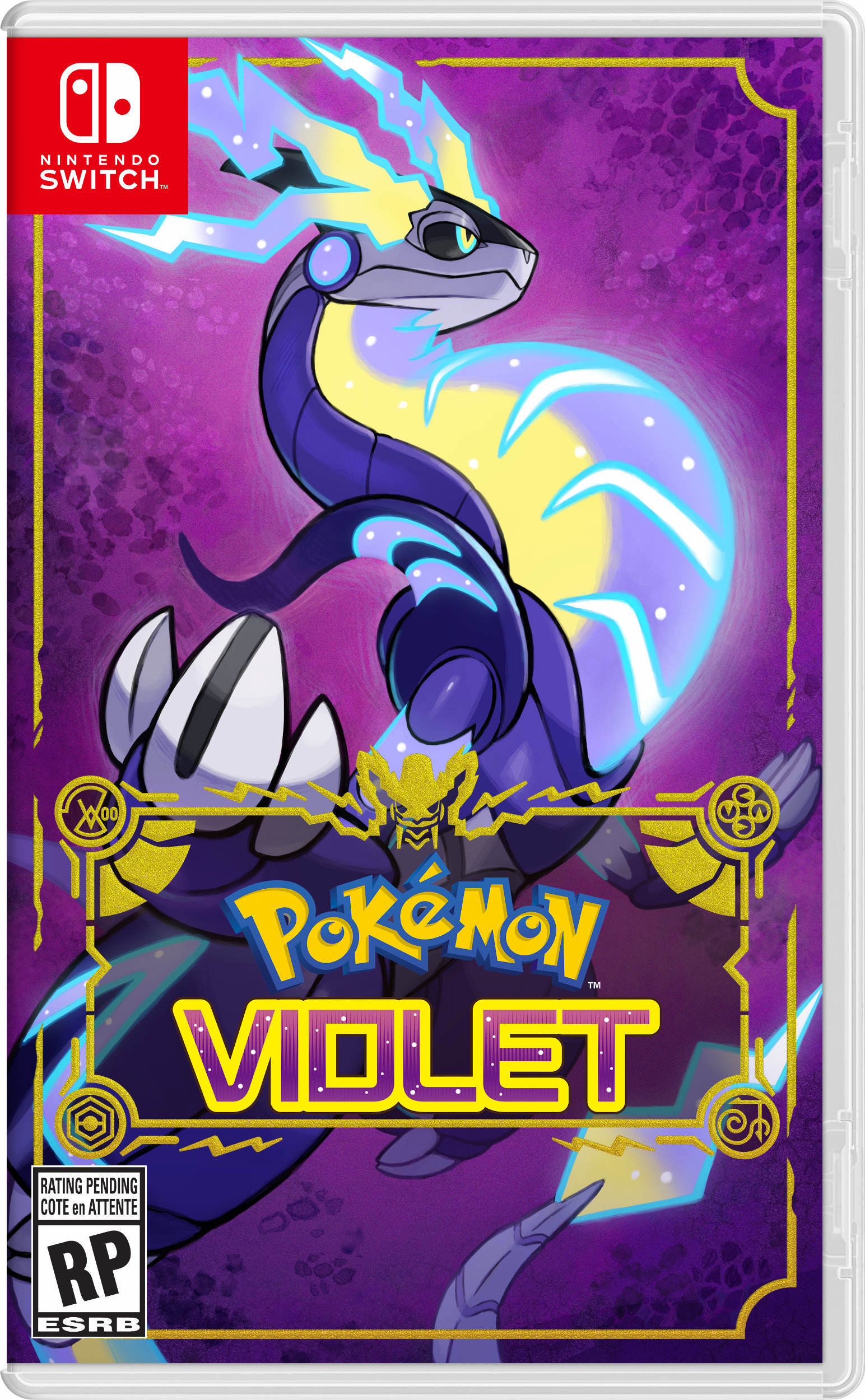
Violet box art

Violet

Mascot: Miraidon

Dittobase

© 2026 dittobase.com. All rights reserved.

This website is an independent platform and is not associated with, validated, backed, or sponsored by Nintendo, Game Freak, Niantic, or The Pokémon Company.

Dittobase

Pokémon Scarlet and Violet box art

Pokémon Scarlet and Violet

The first open-world adventure in the Pokémon series

Generation 9Game Freak

Overview

Pokémon Scarlet and Pokémon Violet launched worldwide on Nintendo Switch on November 18, 2022, opening Generation IX with the series' first true open world. The Paldea region, drawn from the landscapes of Spain and Portugal, is one continuous map with no level scaling, so any mountain, sea cave, or city is fair game from day one. Trainers attend an academy (Naranja in Scarlet, Uva in Violet) and head out as part of an independent study programme called the Treasure Hunt.

The Treasure Hunt is really three stories running in parallel. Take on Paldea's eight gym leaders on Victory Road, hunt giant Titan Pokémon for rare herbs on Path of Legends, or dismantle the school's truant army on Starfall Street. Order does not matter, and progress on each path unlocks new traversal moves for your rideable legendary, Koraidon (Scarlet) or Miraidon (Violet).

The headline battle mechanic is Terastallization, which crystallises a Pokémon into a "Tera" form and overrides its typing with a new Tera Type. Tera Raid Battles let up to four trainers team up against a Terastallized boss in real time, and the Union Circle puts a full party of friends into the same open world together. Finish the three story paths and a fourth chapter, The Way Home, opens up the mystery at the bottom of Area Zero.

Story

On the gym side of the Treasure Hunt, called Victory Road, trainers chase a Champion Rank by clearing all eight Paldean gyms. The roster runs from the Bug leader Katy and the Grass artist Brassius to the Ice climber Grusha, with a steady difficulty curve as you visit more cities. The Elite Four (Rika, Poppy, Larry, and Hassel) sit at the top of the academy's league, and beating them leads to a final match with Top Champion Geeta.

Path of Legends follows Arven, a quiet senior trying to save his sick companion, the legendary Pokémon you ride. Each chapter is a hunt for a Titan: an enormous, often Terastallized Pokémon guarding a Herba Mystica. Defeating a Titan lets Arven cook a sandwich that strengthens your legendary, unlocking a new traversal ability such as climbing, swimming, or gliding.

Starfall Street tackles Team Star, a once-rebellious school faction that has lost its way. Each base is run by a boss who builds a single-type squad, and battles open with a five-Pokémon Starmobile auto-battle before the boss fight itself. Finishing all three paths converges into The Way Home, the trip down into Area Zero where Paradox Pokémon (ancient and future variants) appear and the truth about Professor Sada or Turo finally surfaces.

Key features

Open-world Paldea

Paldea is one continuous, seamless map. No loading screens between routes, no level scaling, no gating. Climb a peak the moment you leave the tutorial, or wander into a high-level zone and run for your life. Wild Pokémon roam in the overworld, weather changes the spawn pool, and most ledges, rivers, and walls become traversable as your ride unlocks new moves.

Terastallization

Each Pokémon has a Tera Type, often matching its original typing but sometimes diverging. Terastallizing crystallises the Pokémon into a jeweled form, replaces its typing with the Tera Type for the duration, and grants a steep damage bonus to moves that match. A Dragon-type with a Steel Tera can suddenly tank Fairy hits. A Charizard with a Normal Tera turns Hyper Beam into a 2.0× nuke. Trainers can Terastallize once per battle, and the choice cascades into the metagame.

Three story paths and the Treasure Hunt

The Treasure Hunt frames the whole game. Victory Road covers gyms, Path of Legends covers Titans and traversal, Starfall Street covers Team Star. You can swap between paths freely, and the games auto-suggest the lowest-level next stop based on where you have been. Each path has its own companion (Nemona, Arven, Penny) and its own ending cinematic.

Co-op multiplayer (Union Circle)

Up to four trainers can join a Union Circle and explore Paldea in the same instance. You see each other's avatars in the field, battle wild Pokémon side by side, trade in person, and tackle the same outbreaks. Co-op is built around shared exploration, not couch-style PvP.

Tera Raid Battles

Up to four trainers gather around a glowing crystal and battle a Terastallized boss in real time, with simultaneous attacks instead of turn order. Higher difficulty stars (up to 6 Star and limited 7 Star events) raise stats, restrict shielding, and gate access to specific Tera Types. Beating a raid is the main way to harvest Tera Shards and farm Pokémon with rare Tera Types.

Version differences

Pokémon Scarlet stars Professor Sada and the legendary Koraidon, and leans on the past: its Paradox Pokémon resemble ancient, prehistoric versions of familiar species (Great Tusk, Brute Bonnet, Sandy Shocks). Pokémon Violet stars Professor Turo and the legendary Miraidon, and leans on the future: its Paradox Pokémon are sleek, mechanical-looking variants (Iron Treads, Iron Bundle, Iron Moth). A short list of regular Pokémon are also version-exclusive (Larvitar, Stonjourner, Stunky in Scarlet, Bagon, Eiscue, Skrelp in Violet, among others), and a few uniforms, academy themes, and minor cutscene framings differ between the two.

New Pokémon

The base games introduce around 110 new Pokémon, including starters Sprigatito, Fuecoco, and Quaxly, plus their evolutionary lines (Meowscarada, Skeledirge, and Quaquaval). New mascots Koraidon and Miraidon double as your rideable legendary. Paldea adds new regional forms (Paldean Wooper, Paldean Tauros) and a roster of Paradox Pokémon: ancient lookalikes in Scarlet, future lookalikes in Violet. Standouts include Lechonk and its evolution Oinkologne, the gym leader pseudo-legendary Tinkaton, electric corgis Pawmi through Pawmot, and the Bug/Dragon Frigibax line. The DLC raises the regional dex past 400 species with returning favourites such as Ninetales, Whimsicott, and Cyclizar.

The Paldea region

Paldea is a roughly diamond-shaped landmass anchored by Mesagoza, the central academy city. To the east are Casseroya Lake and the volcanic Asado Desert. To the west are coastal towns like Cascarrafa and Porto Marinada. To the north lie the snowy peaks of Glaseado, and to the south the beach town of Levincia. The world is built for traversal: your legendary learns to dash, climb, swim, and glide as you clear Titan fights, and each new ability quietly redraws the map.

Three storylines and the Treasure Hunt

The Treasure Hunt is the school's name for "go out and find what matters to you," and the three paths line up with three classmates. Nemona, a Top Champion-track rival, leads Victory Road. Arven, a research student carrying his ailing partner Pokémon, leads Path of Legends. Penny, a hacker hiding behind a code name, leads Starfall Street. Beat all three storylines and the academy opens up the fourth chapter, The Way Home, where the three companions hike with you down into the great crater at the heart of Paldea.

The Hidden Treasure of Area Zero (Teal Mask and Indigo Disk)

The Hidden Treasure of Area Zero rolled out across 2023 and early 2024 in three parts. The Teal Mask (September 13, 2023) sends trainers on a school trip to Kitakami, a rural region inspired by the Japanese countryside, with a folklore-driven plot around three "ogre" Pokémon and the legendary Ogerpon. The Indigo Disk (December 14, 2023) opens the Terarium, a four-biome dome inside Blueberry Academy, and brings back hundreds of returning Pokémon. The free epilogue Mochi Mayhem (January 11, 2024) ties the two arcs together with a final Mythical Pokémon reveal.

Reception and the launch performance issues

Critics praised the open world, the Treasure Hunt structure, and the writing on Penny's and Arven's storylines, but the launch builds shipped with severe frame-rate drops, model pop-in, and crashes that drew refund requests and a public apology from The Pokémon Company. Metacritic settled at 72/100 for Scarlet and 71/100 for Violet, the lowest scores ever for a mainline Pokémon release. Patches 1.1.0 through 1.3.0 and later DLC updates smoothed many of the worst issues, but never the framerate. None of that slowed sales: the games crossed 10 million units in three days and reached 28.28 million lifetime by March 2026, second only to the original Red/Green/Blue/Yellow titles.

FAQ

Which version should I buy, Scarlet or Violet?

Pick by aesthetic and Paradox roster first, then by exclusives. Scarlet gives you Koraidon, Professor Sada, ancient Paradox forms, and a slightly warmer school uniform. Violet gives you Miraidon, Professor Turo, sleek mechanical Paradox forms, and a cooler school theme. The campaigns are otherwise the same. Trainers happy to trade for exclusives can grab whichever cover Pokémon appeals to them.

Are Pokémon Scarlet and Violet open-world?

Yes. Paldea is a single, seamless map with no loading screens between routes and no level scaling. Wild Pokémon roam in the overworld, weather affects spawns, and your rideable legendary unlocks new traversal moves (climbing, swimming, gliding, sprinting) as you progress through Path of Legends.

How does Terastallization work?

Each Pokémon has a Tera Type, usually matching its base typing but sometimes different. In battle, Terastallizing crystallises the Pokémon and replaces its typing with the Tera Type. Moves that match the Tera Type get a strong damage boost, and if the Tera Type matches a move the Pokémon already had STAB on, the multiplier climbs higher again. You can Terastallize once per battle, and you need to visit a Pokémon Center to recharge after.

What does the DLC add and is it worth getting?

The Hidden Treasure of Area Zero expansion adds two new regions (Kitakami and the Terarium inside Blueberry Academy), the legendary Ogerpon and Terapagos, more than 230 returning Pokémon, and the free Mochi Mayhem epilogue with Pecharunt. It is worth it for trainers who want a meatier post-game and a much fuller Pokédex, and the Indigo Disk in particular reshapes the endgame raid scene.

Related links

Official site

External source

At a glance

Japan

November 18, 2022

North America

November 18, 2022

Europe

November 18, 2022

Australia

November 18, 2022

Korea

November 18, 2022

Platforms

Nintendo Switch

Developer

Game Freak

Publisher

The Pokémon Company / Nintendo

Director

Shigeru Ohmori

Producer

Akira Kinashi, Toyokazu Nonaka, Takanori Sowa, Kenji Endo

Composer

Minako Adachi, Junichi Masuda, Go Ichinose, Hiromitsu Maeba, Teruo Taniguchi, Hitomi Sato, Toby Fox

Pokédex

400 entries

Metacritic

72

Units sold

28,280,000
Source: The Pokémon Company / Nintendo financial disclosure; reported figure of 28.28 million lifetime units as of March 2026 (per Wikipedia and Bulbapedia summaries citing Nintendo IR data)

Versions

Scarlet box art

Scarlet

Mascot: Koraidon

Violet box art

Violet

Mascot: Miraidon

Dittobase

© 2026 dittobase.com. All rights reserved.

This website is an independent platform and is not associated with, validated, backed, or sponsored by Nintendo, Game Freak, Niantic, or The Pokémon Company.