



Pokémon FireRed and LeafGreen
Return to Kanto in the first Pokémon remakes.
Overview
Pokémon FireRed and Pokémon LeafGreen launched in Japan on January 29, 2004 and reached North America that September. They are the first remakes in the main series, returning trainers to Kanto eight years after the original Red and Green, rebuilt on Game Boy Advance hardware with redrawn sprites, fuller color, and a richer overworld.
The premise stays loyal to the source. You start in Pallet Town, choose between Bulbasaur, Charmander, or Squirtle, and chase eight Gym Badges across Kanto on the way to the Pokémon League. What changes is everything underneath. All of the Generation III systems carry over from Ruby and Sapphire, so Pokémon now have Natures, Abilities, individual genders, held items, and effort values. Dark and Steel typing applies, move sets reflect modern balance, and breeding is finally available at the Day Care.
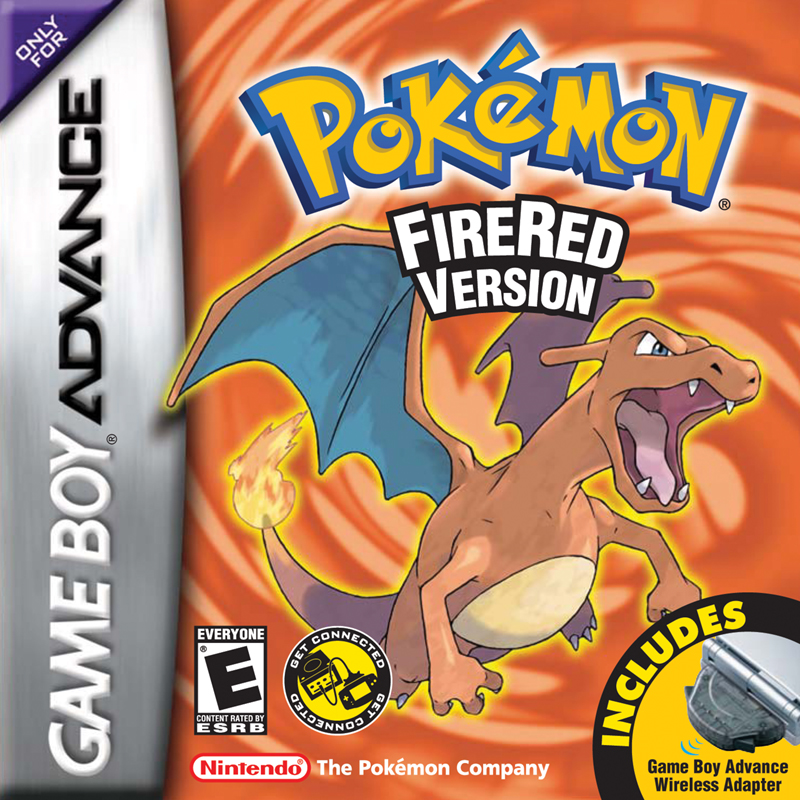
The headline upgrade outside the cartridge is a slim Wireless Adapter that ships with every copy. Pairing two Game Boy Advance systems for trades and battles no longer needs a Link Cable, and up to 30 trainers can gather in the new Union Room to swap Pokémon, duel, or chat without wires.
Story
The story follows the Kanto arc beat for beat. Professor Oak hands you your first partner in Pallet Town. Your rival picks the type that beats yours, and the two of you race across the region collecting Badges from Brock, Misty, Lt. Surge, Erika, Sabrina, Koga, Blaine, and Giovanni. Team Rocket is right where you left them, lurking in Mt. Moon, the Game Corner, Saffron's Silph Co., and the Pokémon Tower in Lavender Town.
The original ending still lands. You climb Victory Road, defeat the Elite Four, and find Blue waiting in the Champion's chamber. Capturing Mewtwo deep in Cerulean Cave is once again the toughest test in the Pokédex.
After the credits, the adventure keeps going. Bill's friend Celio asks for help wiring Kanto's PC network to the Hoenn region, sending you to the Sevii Islands. The seven-island archipelago is brand new to these remakes and adds a second Team Rocket scheme, dozens of Johto-native species, and the hardware unlock that lets you trade with Pokémon Ruby, Sapphire, Emerald, Colosseum, and XD.
Key features
Faithful Kanto remake
Every route, town, and Gym from the 1996 originals is rebuilt for Game Boy Advance, with redrawn sprites, fuller animations, and quality-of-life upgrades like a contextual Help System that surfaces tips at any point in the menu.
Wireless Adapter and single-cart link
A slim Wireless Adapter ships in every box. Two trainers can trade or battle from up to 30 feet away with no Link Cable, and the Union Room supports up to 30 players in the same lobby for trades, duels, and chatting.
Sevii Islands post-game
After the Elite Four falls, a seven-island archipelago opens up east of Kanto. The Sevii Islands add a fresh Team Rocket questline, dozens of Johto Pokémon that never appeared in the original Red and Blue, and the key items that unlock cross-generation trading with the Hoenn games.
Modern Generation III mechanics
All of the systems introduced in Ruby and Sapphire apply here. Pokémon have Natures, Abilities, individual genders, held items, and effort values. Dark and Steel typing rebalances classic matchups, and Day Care breeding finally arrives in Kanto.
Path to the National Pokédex
Clearing the Pokémon League and progressing the Sevii Islands quest upgrades your Pokédex to the National version, opening evolutions like Crobat, Steelix, and Blissey, and authorizing trades with Ruby, Sapphire, Emerald, Colosseum, and XD: Gale of Darkness.
Version differences
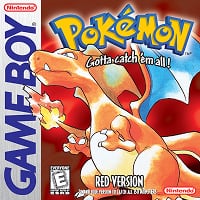
The two games tell the same story with different wild encounters. FireRed leans heavier on Fire- and Bug-themed species, while LeafGreen favors Ice- and Water-themed alternates.
- FireRed-exclusive Pokémon include Ekans, Arbok, Oddish and its line, Psyduck and Golduck, Growlithe and Arcanine, Shellder and Cloyster, Scyther, Scizor, Electabuzz, Elekid, Wooper, Quagsire, Murkrow, Qwilfish, Skarmory, Delibird, and Deoxys in its Attack Forme.
- LeafGreen-exclusive Pokémon include Sandshrew and Sandslash, Vulpix and Ninetales, Bellsprout and Victreebel, Slowpoke, Slowbro, Slowking, Staryu and Starmie, Magmar, Magby, Pinsir, Marill and Azumarill, Misdreavus, Sneasel, Remoraid and Octillery, Mantine, and Deoxys in its Defense Forme.
Either version delivers the same campaign. Trading is the intended path to a complete Pokédex.
New Pokémon
FireRed and LeafGreen are remakes; they do not introduce new species. They expand the playable Pokédex by reintegrating Generation II Pokémon and adding the Sevii Islands' regional fauna, and the National Pokédex unlock pushes the total catchable through trading to 386.
The Kanto journey
The main campaign is the original Kanto adventure, rebuilt. You travel Routes 1 through 25, train through eight Gyms, foil Team Rocket at every turn, and finish on Indigo Plateau against the Elite Four. The structure is unchanged from the 1996 games, so longtime fans know the geography by heart. What is different is the texture: animated overworld sprites, a Help System tied to the Select button, the Vs. Seeker for trainer rematches, and a Fame Checker that tracks lore about famous Kanto characters.
Sevii Islands
The Sevii Islands open after the credits and form the heart of the post-game. Helping Celio repair the inter-region trade network sends you across seven islands inspired by Japan's Izu archipelago. Along the way you confront a remnant of Team Rocket, encounter Johto species like Yanma, Mareep, and Heracross in the wild, and earn the Rainbow Pass that lets your tickets work on every island. Clearing the questline activates trading with the Hoenn games, the final step toward a complete National Pokédex.
Reception and legacy
Critics treated the remakes warmly. Aggregate scores landed around 81 on Metacritic, with IGN scoring 9.0 of 10 and Famitsu giving 33 of 40. Lifetime sales reached 12 million copies by March 31, 2013, making FireRed and LeafGreen the second best-selling Game Boy Advance Pokémon titles after Ruby and Sapphire. Their bigger legacy is the template they established. Every later remake, from HeartGold and SoulSilver through Brilliant Diamond and Shining Pearl, traces its structure back to what Game Freak proved here: a faithful return to a classic region, rebuilt on modern hardware, with a fresh post-game stitched onto the back end.
FAQ
Are FireRed and LeafGreen the same game?
They tell the same story across Kanto and the Sevii Islands. The difference is which Pokémon appear in the wild. About two dozen species are exclusive to each version, so most trainers pair up with a friend on the opposite cartridge to fill out the Pokédex.
Do I need a Wireless Adapter to play?
No. The Wireless Adapter is included in the box and is only used for wireless trading and battling. The cartridge plays normally as a single-player game without it, and the older Game Link Cable still works for trainers who prefer wired connections.
How many Pokémon can I catch?
The main story keeps you to the original 151 Kanto Pokémon. After clearing the Elite Four and progressing the Sevii Islands quest, the Pokédex upgrades to the National version, opening Generation II species in the wild and authorizing trades with Ruby, Sapphire, Emerald, Colosseum, and XD: Gale of Darkness for the full 386.
How do I unlock the Sevii Islands?
Bill invites you to the Sevii Islands shortly after you reach Cerulean City in the post-game, once you have defeated the Elite Four. Speak to him at his house on the Cape, and a ferry from Vermilion City will take you to One Island to start the questline.
Can I trade with Ruby, Sapphire, and Emerald?
Yes, but only after completing the Sevii Islands network quest. You need to deliver the Ruby and Sapphire key items to Celio on One Island. Once the upgraded trade machine is active, you can move Pokémon freely between FireRed, LeafGreen, Ruby, Sapphire, Emerald, Colosseum, and XD: Gale of Darkness.
Related links
At a glance
Japan
North America
Europe
Australia
Platforms
Developer
Publisher
Director
Producer
Composer
Pokédex
Metacritic
Versions
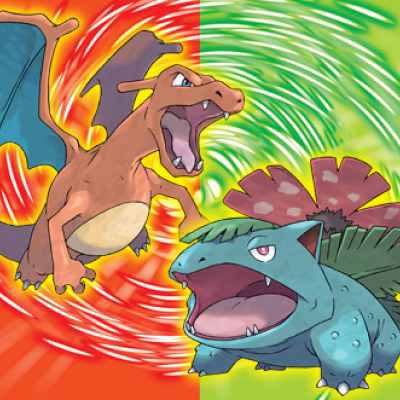
FireRed
Mascot: Charizard
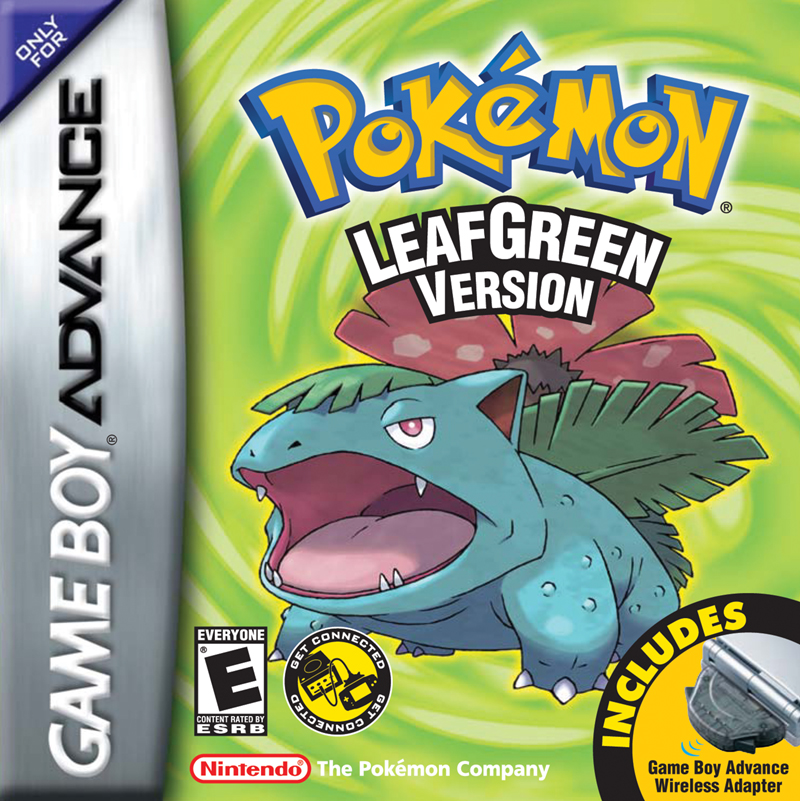
LeafGreen
Mascot: Venusaur