


















Dittobase

Home

Games

Pokémon GO
Pokopia
Pokémon Unite

Cards

TCG Pocket
Pokémon TCG

Main Series

Legends Z-A
Scarlet & Violet

Tools

Games

Game

Games

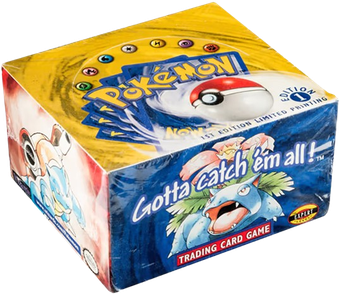
Pokémon Trading Card Game box art

Pokémon Trading Card Game

Build your deck, battle your friends, collect every card.

Creatures Inc.Latest news

Overview

The Pokémon TCG turns the video games into a card game you play across a tabletop. Each player builds a 60-card deck of Pokémon, Trainer, and Energy cards, then draws six Prize cards. The first player to claim all six Prizes (by knocking out the opponent's Pokémon) wins. You can also win by leaving your opponent with no Pokémon in play, or by drawing their deck down to zero.

The game was developed by Creatures Inc. and is now published worldwide by The Pokémon Company. Cards come in expansion sets that line up roughly with each new mainline Pokémon era, from the original Base Set through the current Scarlet & Violet era and beyond. Special mechanics like Pokémon ex, V, VMAX, and VSTAR add powerful cards that change how decks are built and how matches play out.

Beyond the kitchen-table game, the TCG runs an official competitive circuit (Play! Pokémon) that culminates in the annual Pokémon World Championships, first held in Orlando in 2004. Players who prefer a screen can pick up the same cards in Pokémon TCG Live, the free digital companion that replaced Pokémon TCG Online in 2022.

Story

The TCG's "story" is really the franchise's history. The game debuted in Japan on October 20, 1996, published by Media Factory and developed by Creatures Inc. as a tabletop companion to Pokémon Red and Green. Wizards of the Coast brought it west in early 1999 with the Base Set, and the launch sold 400,000 packs in under six weeks. The English first-edition Base Set printing now contains some of the most valuable trading cards ever sold.

In June 2003, The Pokémon Company took over global publishing from Wizards of the Coast and unified the brand. From that point forward the game has shipped multiple expansions per year, each tied to the mainline games: EX, Diamond & Pearl, HeartGold & SoulSilver, Black & White, XY, Sun & Moon, Sword & Shield, and now Scarlet & Violet. Major mechanic eras (Pokémon ex, GX, V, VMAX, VSTAR) have come and gone with these blocks, reshaping the competitive metagame each time.

The modern Pokémon TCG is a true global hobby. More than 75 billion cards have been printed in 16 languages and sold in over 90 countries as of March 2025. The Pikachu Illustrator card, awarded to winners of a 1997 to 1998 CoroCoro art contest, became the most expensive trading card ever traded after reselling for $16.5 million in February 2026.

Key features

Expansion sets and rotation

The TCG releases several expansion sets each year. Each one introduces around 150 to 250 new cards, including new Pokémon, Trainer cards, and special rares. The Standard format rotates older sets out every year to keep competitive play fresh, while the Expanded format keeps a wider pool of sets legal.

Pokémon ex, V, VMAX, and VSTAR

Special Pokémon cards have driven each era of the modern game. Pokémon ex returned in Scarlet & Violet with a clean 2-Prize design. Earlier eras introduced GX (one big attack per game), V (the Sword & Shield baseline), VMAX (3 Prizes, huge HP), and VSTAR (a once-per-game power). Knowing which mechanics are Standard-legal is core to deck-building.

Play! Pokémon and the World Championships

The competitive scene runs through Play! Pokémon, the official organized play program. Trainers earn Championship Points at local, regional, and international events, then compete in Junior, Senior, and Masters divisions at the Pokémon World Championships. Worlds has run every year since 2004, with stops in Yokohama, London, Honolulu, and beyond.

Pokémon TCG Live

Pokémon TCG Live is the free digital version of the game, available on PC, Mac, iOS, and Android. It launched in 2022 to replace Pokémon TCG Online and uses the same cards, formats, and rotation as the physical game. It's the easiest way to learn the rules, test decks, and play matches without a binder full of cards.

Collecting and chase rares

For many trainers, the TCG is as much about the binder as the battle. Each set ships with chase cards (full-art, alt-art, rainbow rare, and gold rare variants of popular Pokémon) that drive trading and the secondary market. Special sets like Prismatic Evolutions and 151 lean into nostalgia and collector-first design.

New Pokémon

The Pokémon TCG releases new sets several times a year, with each one tied to the current mainline era. Expansions add new Pokémon, evolved forms, regional variants, and ace-rare chase cards. Special sets like 151, Prismatic Evolutions, and Ascended Heroes reprint fan-favorite Pokémon in new alt-art treatments alongside the latest mechanics.

How the game is played

Each player shuffles a 60-card deck, draws seven cards, and sets out six Prize cards. The first to knock out enough of the opponent's Pokémon to claim all six Prizes wins. On your turn you draw a card, optionally attach one Energy, play Basic Pokémon to your Bench, evolve Pokémon, play Trainer cards, and finish with an attack. Trainer cards are limited to one Supporter and one Stadium per turn, which keeps the engine balanced. Most basic Pokémon enter play on the Bench, then evolve over multiple turns into Stage 1 and Stage 2 forms.

Set structure and rotation

Expansions land in waves that line up with the mainline games. The current Scarlet & Violet era spans sets like Paldea Evolved, Obsidian Flames, Paradox Rift, Temporal Forces, Twilight Masquerade, Stellar Crown, Surging Sparks, Prismatic Evolutions, Journey Together, Destined Rivals, Black Bolt, White Flare, Mega Evolution, Phantasmal Flames, Perfect Order, and Ascended Heroes. Each set adds new mechanics or themes (Tera Pokémon, Ancient and Future cards, ACE SPEC trainers). The Standard format only allows cards from a rolling window of recent sets, while Expanded reaches back further.

Competitive play

Official tournaments run through Play! Pokémon. Local Leagues feed into League Cups, then Regional Championships and International Championships, and finally the Pokémon World Championships each summer. Players compete in three age divisions: Junior (11 and under), Senior (12 to 15), and Masters (16+). Decks are built around a small set of top archetypes per format, and the meta shifts as each new expansion rotates in.

Card values and the collecting hobby

The Pokémon TCG has one of the most active secondary markets of any collectible. Chase cards from modern sets often trade for hundreds of dollars in graded condition, and vintage Wizards of the Coast cards from the original Base Set (especially 1st Edition Shadowless Charizard) regularly sell for five and six figures. The Pikachu Illustrator card sold for $5.275 million in 2021 and resold for $16.5 million in February 2026, the highest price ever paid for a trading card.

FAQ

How do I learn to play the Pokémon TCG?

The fastest way is to download Pokémon TCG Live, which walks you through the rules with built-in tutorials and gives you a starter deck for free. From there, picking up a physical Battle Deck or one of the per-set Starter Decks at a local game store is the easiest on-ramp to playing in person.

What's the difference between Standard and Expanded?

Standard uses a rolling window of recent expansions (currently the most recent Scarlet & Violet sets) and rotates older cards out every year. Expanded reaches all the way back to the Black & White era and lets you use a much larger card pool. Most official tournaments run Standard; Expanded shows up at select major events.

How much does it cost to get into the TCG?

A preconstructed Battle Deck or theme deck runs about $15 to $20 and is enough to play your first matches. A competitive Standard deck typically lands between $100 and $400 depending on the chase cards. Pokémon TCG Live is free, so it's a zero-cost way to test decks and learn matchups before buying physical cards.

How are new sets released?

The Pokémon Company publishes a handful of main expansions and special sets each year, roughly every two to three months. New sets bring in fresh Pokémon (tied to the latest mainline games), new mechanics, and reprints of older Trainer cards. Prerelease events run the weekend before each set's launch and are a great way to try the new cards in a draft-like format.

Related links

Official site

External source

Latest news

At a glance

Japan

October 20, 1996

North America

January 9, 1999

Europe

January 1, 1999

Platforms

Physical card game

Developer

Creatures Inc.

Publisher

The Pokémon Company
Dittobase

© 2026 dittobase.com. All rights reserved.

This website is an independent platform and is not associated with, validated, backed, or sponsored by Nintendo, Game Freak, Niantic, or The Pokémon Company.

Dittobase

Pokémon Trading Card Game box art

Pokémon Trading Card Game

Build your deck, battle your friends, collect every card.

Creatures Inc.Latest news

Overview

The Pokémon TCG turns the video games into a card game you play across a tabletop. Each player builds a 60-card deck of Pokémon, Trainer, and Energy cards, then draws six Prize cards. The first player to claim all six Prizes (by knocking out the opponent's Pokémon) wins. You can also win by leaving your opponent with no Pokémon in play, or by drawing their deck down to zero.

The game was developed by Creatures Inc. and is now published worldwide by The Pokémon Company. Cards come in expansion sets that line up roughly with each new mainline Pokémon era, from the original Base Set through the current Scarlet & Violet era and beyond. Special mechanics like Pokémon ex, V, VMAX, and VSTAR add powerful cards that change how decks are built and how matches play out.

Beyond the kitchen-table game, the TCG runs an official competitive circuit (Play! Pokémon) that culminates in the annual Pokémon World Championships, first held in Orlando in 2004. Players who prefer a screen can pick up the same cards in Pokémon TCG Live, the free digital companion that replaced Pokémon TCG Online in 2022.

Story

The TCG's "story" is really the franchise's history. The game debuted in Japan on October 20, 1996, published by Media Factory and developed by Creatures Inc. as a tabletop companion to Pokémon Red and Green. Wizards of the Coast brought it west in early 1999 with the Base Set, and the launch sold 400,000 packs in under six weeks. The English first-edition Base Set printing now contains some of the most valuable trading cards ever sold.

In June 2003, The Pokémon Company took over global publishing from Wizards of the Coast and unified the brand. From that point forward the game has shipped multiple expansions per year, each tied to the mainline games: EX, Diamond & Pearl, HeartGold & SoulSilver, Black & White, XY, Sun & Moon, Sword & Shield, and now Scarlet & Violet. Major mechanic eras (Pokémon ex, GX, V, VMAX, VSTAR) have come and gone with these blocks, reshaping the competitive metagame each time.

The modern Pokémon TCG is a true global hobby. More than 75 billion cards have been printed in 16 languages and sold in over 90 countries as of March 2025. The Pikachu Illustrator card, awarded to winners of a 1997 to 1998 CoroCoro art contest, became the most expensive trading card ever traded after reselling for $16.5 million in February 2026.

Key features

Expansion sets and rotation

The TCG releases several expansion sets each year. Each one introduces around 150 to 250 new cards, including new Pokémon, Trainer cards, and special rares. The Standard format rotates older sets out every year to keep competitive play fresh, while the Expanded format keeps a wider pool of sets legal.

Pokémon ex, V, VMAX, and VSTAR

Special Pokémon cards have driven each era of the modern game. Pokémon ex returned in Scarlet & Violet with a clean 2-Prize design. Earlier eras introduced GX (one big attack per game), V (the Sword & Shield baseline), VMAX (3 Prizes, huge HP), and VSTAR (a once-per-game power). Knowing which mechanics are Standard-legal is core to deck-building.

Play! Pokémon and the World Championships

The competitive scene runs through Play! Pokémon, the official organized play program. Trainers earn Championship Points at local, regional, and international events, then compete in Junior, Senior, and Masters divisions at the Pokémon World Championships. Worlds has run every year since 2004, with stops in Yokohama, London, Honolulu, and beyond.

Pokémon TCG Live

Pokémon TCG Live is the free digital version of the game, available on PC, Mac, iOS, and Android. It launched in 2022 to replace Pokémon TCG Online and uses the same cards, formats, and rotation as the physical game. It's the easiest way to learn the rules, test decks, and play matches without a binder full of cards.

Collecting and chase rares

For many trainers, the TCG is as much about the binder as the battle. Each set ships with chase cards (full-art, alt-art, rainbow rare, and gold rare variants of popular Pokémon) that drive trading and the secondary market. Special sets like Prismatic Evolutions and 151 lean into nostalgia and collector-first design.

New Pokémon

The Pokémon TCG releases new sets several times a year, with each one tied to the current mainline era. Expansions add new Pokémon, evolved forms, regional variants, and ace-rare chase cards. Special sets like 151, Prismatic Evolutions, and Ascended Heroes reprint fan-favorite Pokémon in new alt-art treatments alongside the latest mechanics.

How the game is played

Each player shuffles a 60-card deck, draws seven cards, and sets out six Prize cards. The first to knock out enough of the opponent's Pokémon to claim all six Prizes wins. On your turn you draw a card, optionally attach one Energy, play Basic Pokémon to your Bench, evolve Pokémon, play Trainer cards, and finish with an attack. Trainer cards are limited to one Supporter and one Stadium per turn, which keeps the engine balanced. Most basic Pokémon enter play on the Bench, then evolve over multiple turns into Stage 1 and Stage 2 forms.

Set structure and rotation

Expansions land in waves that line up with the mainline games. The current Scarlet & Violet era spans sets like Paldea Evolved, Obsidian Flames, Paradox Rift, Temporal Forces, Twilight Masquerade, Stellar Crown, Surging Sparks, Prismatic Evolutions, Journey Together, Destined Rivals, Black Bolt, White Flare, Mega Evolution, Phantasmal Flames, Perfect Order, and Ascended Heroes. Each set adds new mechanics or themes (Tera Pokémon, Ancient and Future cards, ACE SPEC trainers). The Standard format only allows cards from a rolling window of recent sets, while Expanded reaches back further.

Competitive play

Official tournaments run through Play! Pokémon. Local Leagues feed into League Cups, then Regional Championships and International Championships, and finally the Pokémon World Championships each summer. Players compete in three age divisions: Junior (11 and under), Senior (12 to 15), and Masters (16+). Decks are built around a small set of top archetypes per format, and the meta shifts as each new expansion rotates in.

Card values and the collecting hobby

The Pokémon TCG has one of the most active secondary markets of any collectible. Chase cards from modern sets often trade for hundreds of dollars in graded condition, and vintage Wizards of the Coast cards from the original Base Set (especially 1st Edition Shadowless Charizard) regularly sell for five and six figures. The Pikachu Illustrator card sold for $5.275 million in 2021 and resold for $16.5 million in February 2026, the highest price ever paid for a trading card.

FAQ

How do I learn to play the Pokémon TCG?

The fastest way is to download Pokémon TCG Live, which walks you through the rules with built-in tutorials and gives you a starter deck for free. From there, picking up a physical Battle Deck or one of the per-set Starter Decks at a local game store is the easiest on-ramp to playing in person.

What's the difference between Standard and Expanded?

Standard uses a rolling window of recent expansions (currently the most recent Scarlet & Violet sets) and rotates older cards out every year. Expanded reaches all the way back to the Black & White era and lets you use a much larger card pool. Most official tournaments run Standard; Expanded shows up at select major events.

How much does it cost to get into the TCG?

A preconstructed Battle Deck or theme deck runs about $15 to $20 and is enough to play your first matches. A competitive Standard deck typically lands between $100 and $400 depending on the chase cards. Pokémon TCG Live is free, so it's a zero-cost way to test decks and learn matchups before buying physical cards.

How are new sets released?

The Pokémon Company publishes a handful of main expansions and special sets each year, roughly every two to three months. New sets bring in fresh Pokémon (tied to the latest mainline games), new mechanics, and reprints of older Trainer cards. Prerelease events run the weekend before each set's launch and are a great way to try the new cards in a draft-like format.

Related links

Official site

External source

Latest news

At a glance

Japan

October 20, 1996

North America

January 9, 1999

Europe

January 1, 1999

Platforms

Physical card game

Developer

Creatures Inc.

Publisher

The Pokémon Company
Dittobase

© 2026 dittobase.com. All rights reserved.

This website is an independent platform and is not associated with, validated, backed, or sponsored by Nintendo, Game Freak, Niantic, or The Pokémon Company.